Exhibit 02 of 03Built & Validated
Ostia
The modular static-fire stand that holds the motor, takes its thrust, and records the burn.
- Status
- Built & Validated
- Medium
- SolidWorks · Ansys Workbench · DAQ
- Role
- President & Propulsion Lead — NEAL Aerospace
Everything NEAL builds ends up bolted down and fired horizontally. Ostia is the infrastructure for that: a modular welded-steel stand that holds Remus on a linear rail, takes its thrust through a pair of load cells into a gusseted wall, and records the burn.
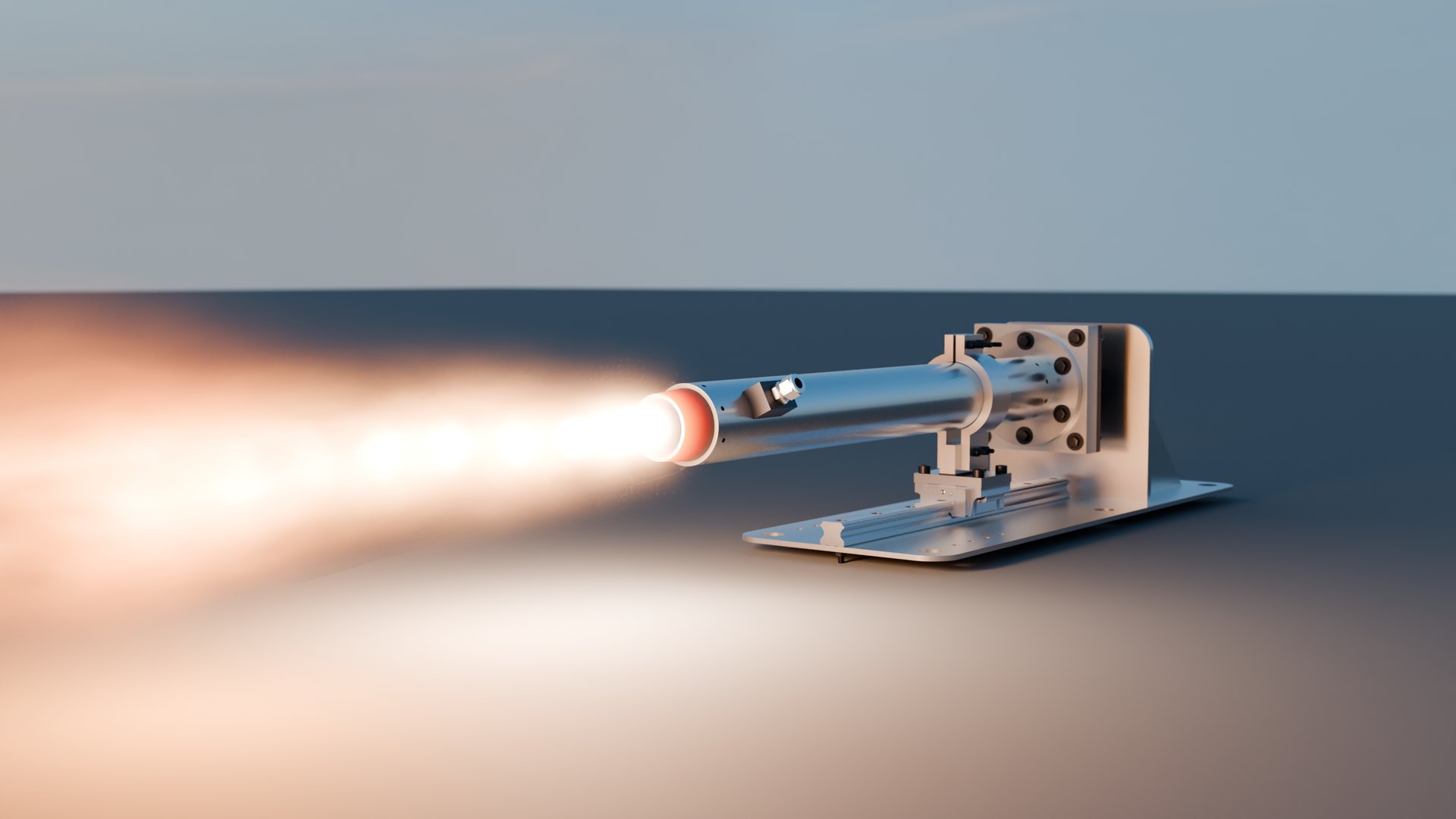
I designed the structure in SolidWorks for 1,000 lbf of thrust at a 2.5 factor of safety and analysed it in Ansys. The thrust wall and gussets pass with room to spare. The load-cell flexures and the 1/4 in base plate fall short of 2.5, so the load-cell mounting and the rocket clamp are being redesigned; the results shown are for the stand as drawn.
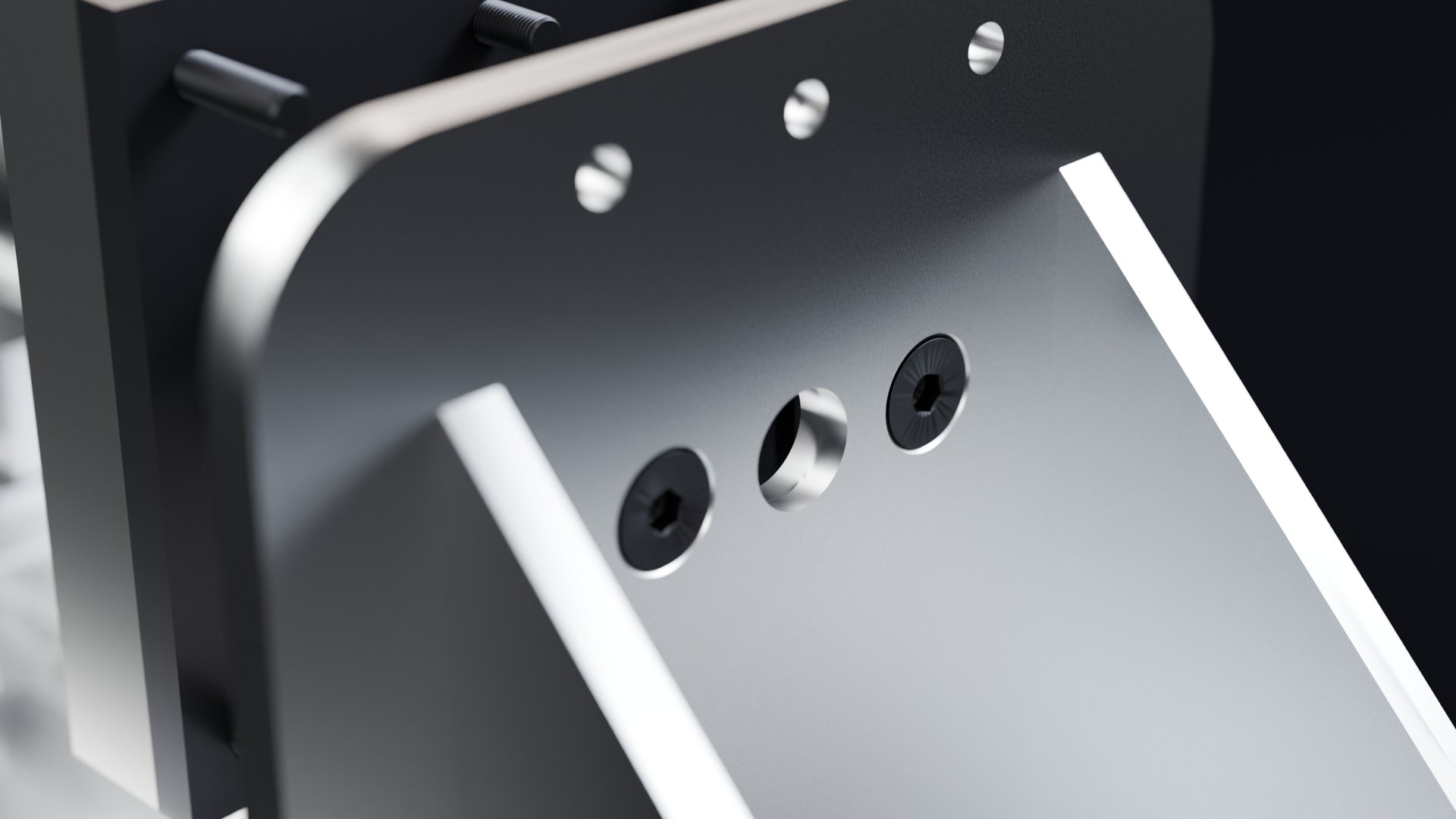
The stand carries a 2,000 lbf load cell on the thrust axis and thermocouples on the chamber, logged at 1 kHz. That is fast enough to capture the ignition transient and the shape of the thrust curve, which is what closes the loop back to the injector models.
The full stand
Motor, clamp, linear carriage, thrust plate and load cells on one base plate. Thirty-six pre-rendered frames, scrubbed by scroll.
Scroll to rotate